Understanding behavior patterns is crucial in managing and modifying behaviors, especially in educational or therapeutic settings. One effective tool for tracking behavior is the Antecedent Behavior Consequence (ABC) chart. This chart helps to identify triggers or antecedents that lead to certain behaviors, the behaviors themselves, and the consequences that follow. By using a Printable ABC Chart, educators, therapists, and parents can easily track and analyze behavior patterns to develop effective intervention strategies.
Having a Printable ABC Chart allows for easy documentation and analysis of behavior patterns. It provides a visual representation of the relationship between antecedents, behaviors, and consequences, making it easier to identify patterns and trends. This tool can be used in various settings, such as schools, therapy sessions, or at home, to track behavior over time and make informed decisions about intervention strategies.
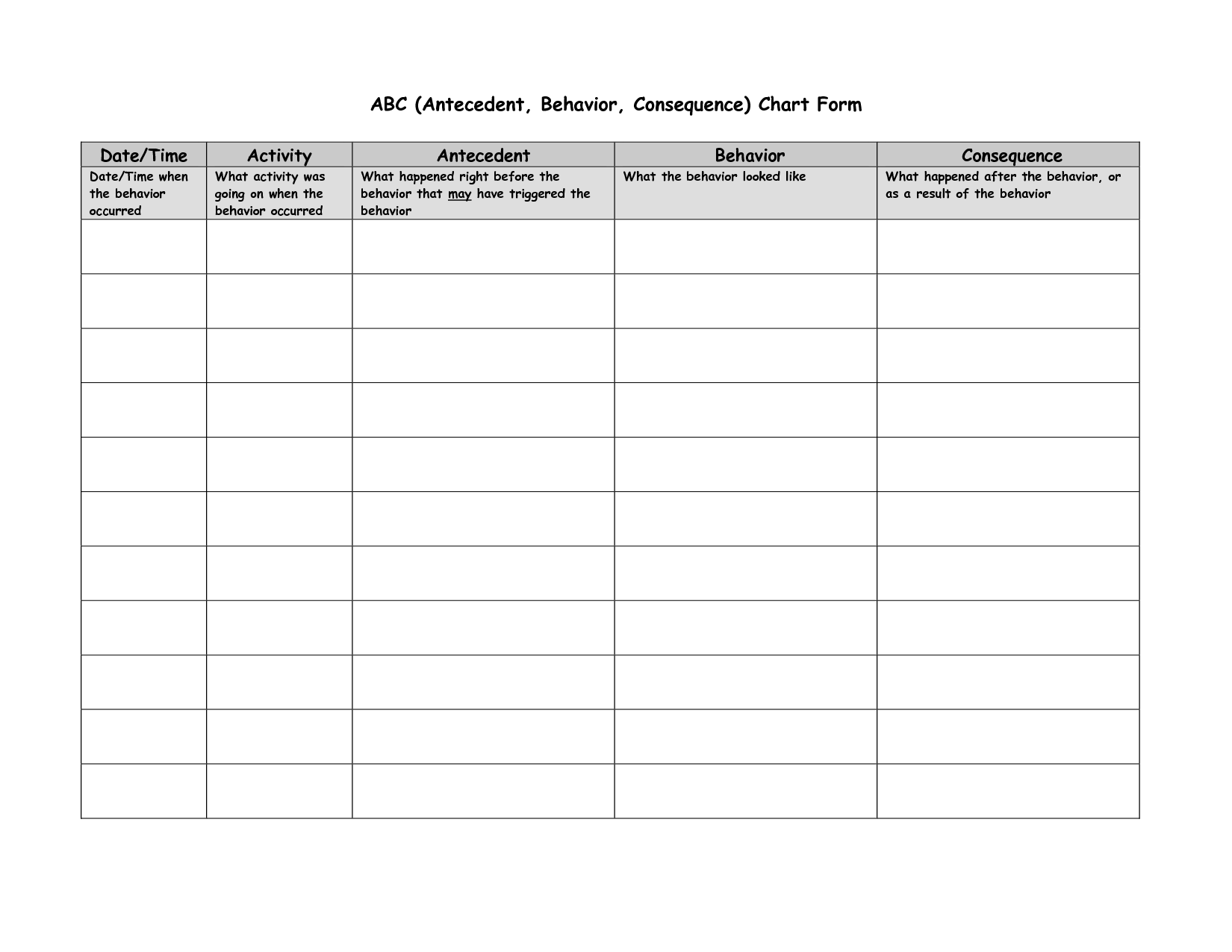 Printable Antecedent Behavior Consequence Chart
Printable Antecedent Behavior Consequence Chart
A Printable ABC Chart typically consists of three columns: Antecedent, Behavior, and Consequence. In the Antecedent column, the user records the events or triggers that occur before the behavior. The Behavior column is where the behavior itself is described or recorded. Finally, in the Consequence column, the user notes the outcomes or reactions that follow the behavior. By filling out this chart consistently, patterns and trends in behavior can be identified, leading to more effective behavior management strategies.
Using a Printable ABC Chart can also help in communication and collaboration among professionals and caregivers. By sharing the chart with other team members, everyone involved in the individual’s care can have a better understanding of the behavior patterns and work together to develop a comprehensive intervention plan. This collaboration can lead to more consistent and effective strategies for managing behaviors.
Furthermore, a Printable ABC Chart can be a valuable tool for tracking progress and evaluating the effectiveness of interventions. By comparing data over time, caregivers and professionals can determine if the implemented strategies are working or if adjustments need to be made. This data-driven approach can lead to more targeted and successful behavior management plans.
In conclusion, a Printable Antecedent Behavior Consequence Chart is a valuable tool for tracking and analyzing behavior patterns in educational, therapeutic, or home settings. By using this chart, caregivers, educators, and therapists can better understand behavior triggers, patterns, and consequences, leading to more effective intervention strategies. With easy documentation and analysis, collaboration among team members, and data-driven decision-making, a Printable ABC Chart can be a powerful tool in behavior management.