When it comes to gardening, one of the best ways to ensure a successful harvest is through companion planting. Companion planting is the practice of planting certain crops together to benefit each other in various ways, such as pest control, pollination, and nutrient uptake. By utilizing a printable companion planting chart, gardeners can easily plan out their garden layout and optimize the health and productivity of their plants.
Companion planting has been practiced for centuries and is based on the principles of permaculture and traditional farming methods. It is a natural and sustainable way to promote plant health and increase yields without the use of harmful chemicals. With a printable companion planting chart, gardeners can easily determine which plants work well together and which ones should be kept apart to avoid competition or negative interactions.
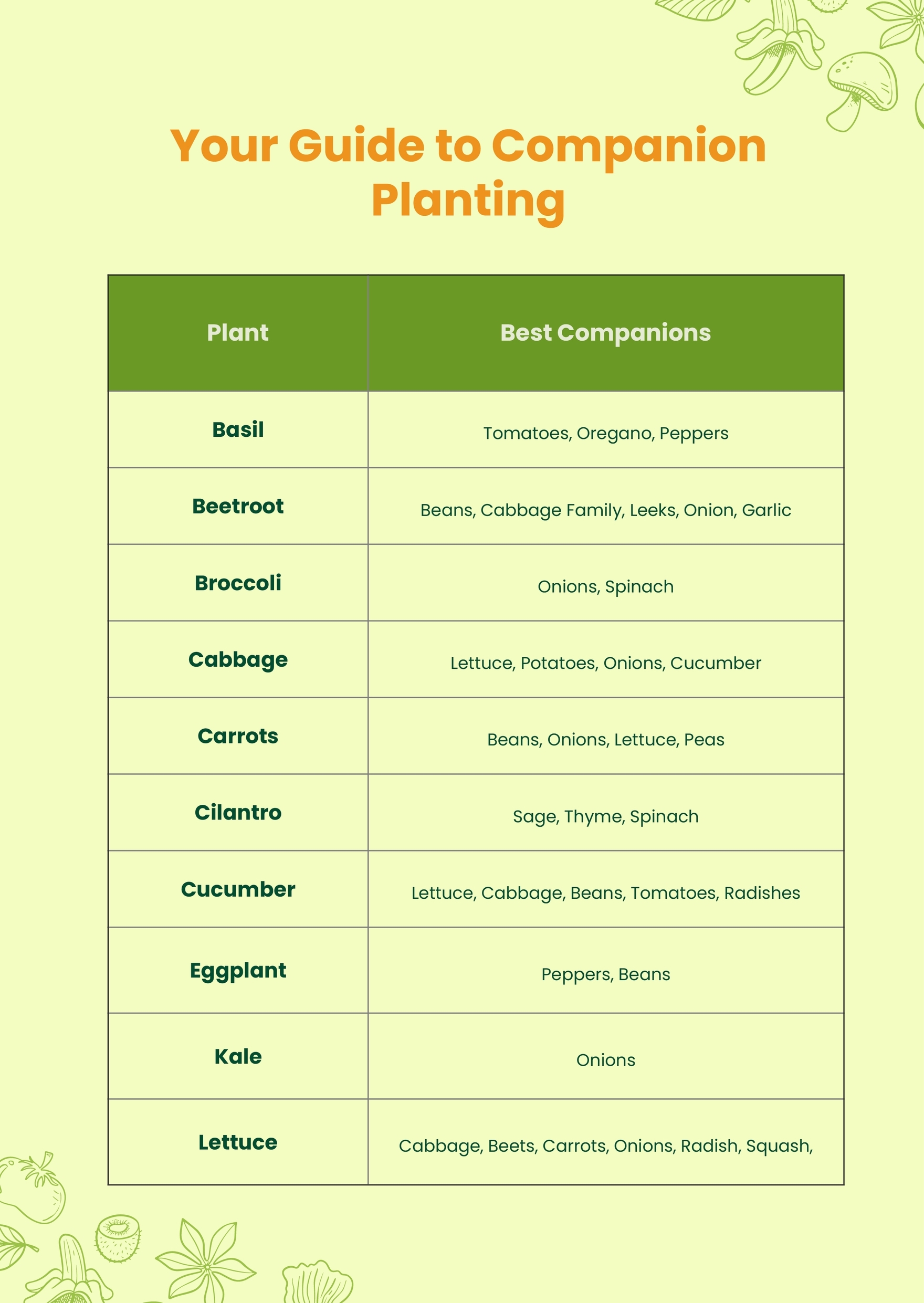 Printable Companion Planting Chart
Printable Companion Planting Chart
A printable companion planting chart is a valuable tool for any gardener looking to maximize the potential of their garden. This chart typically lists common vegetables, herbs, and flowers and provides information on which plants are compatible with each other and which ones should be avoided. By following the recommendations on the chart, gardeners can create a harmonious garden ecosystem that promotes healthy growth and minimizes the risk of pests and diseases.
For example, planting basil next to tomatoes can help repel pests and improve the flavor of the tomatoes, while planting marigolds near beans can deter harmful nematodes. By consulting a printable companion planting chart, gardeners can take the guesswork out of planning their garden and ensure a bountiful harvest.
In addition to pest control and flavor enhancement, companion planting can also improve soil fertility and reduce the need for fertilizers. For instance, planting nitrogen-fixing legumes like peas or beans near heavy feeders like corn or squash can help replenish the soil with essential nutrients. By incorporating companion planting strategies into their garden design, gardeners can create a self-sustaining and productive ecosystem that benefits both plants and the environment.
In conclusion, utilizing a printable companion planting chart is a simple yet effective way to enhance the health and productivity of your garden. By following the guidelines on the chart and experimenting with different plant combinations, gardeners can create a diverse and vibrant garden that thrives with minimal intervention. So why not give companion planting a try in your garden and reap the benefits of this age-old gardening technique?